Join us on Facebook

My Pet Parakeet | Just another WordPress site

Pet Parakeet

Pet Parakeets are small, colorful, and bite sized for most other animals. If you own other pets I recommend you keep them well away from your parakeet.

Dogs and Parakeets

Most well trained dogs can interact with your parakeet under close supervision. They will enjoy watching the bird and of course smelling it. Don’t let you dog lick your parrot because bacteria in dog saliva (and your saliva) can get your parakeet sick.

Never leave your dog alone with your bird, even if you think your dog is tame enough. Dogs are hunters by instinct and you wouldn’t and “accident” to occur.

Cats and Parakeets

Cats should never be allowed near your parakeet even under close supervision. Wild cats eat birds as an important part of their diet. The instinct to kill is extremely powerful. Even caged birds can get clawed by a cat so do your best to keep the animals in separate rooms.

If your pet parakeet gets scratched by a cat, disinfect the wound as soon as possible. The bacteria on cat claws can kill your bird.

Other dangerous pets

Anything that eats meat should never be left alone with your bird. Ferrets, rats, and snakes are all a threat to birds. Never keep them close together with each other.

Pets that are safe with Parakeets

Other pets like bunnies, mice, hamsters, gerbils, and guinea pigs can be trusted with your pet parakeet but make sure all the animals are clean and that your bird is not exposed to urine or droppings from the other animals.

No Comments, add your own comment

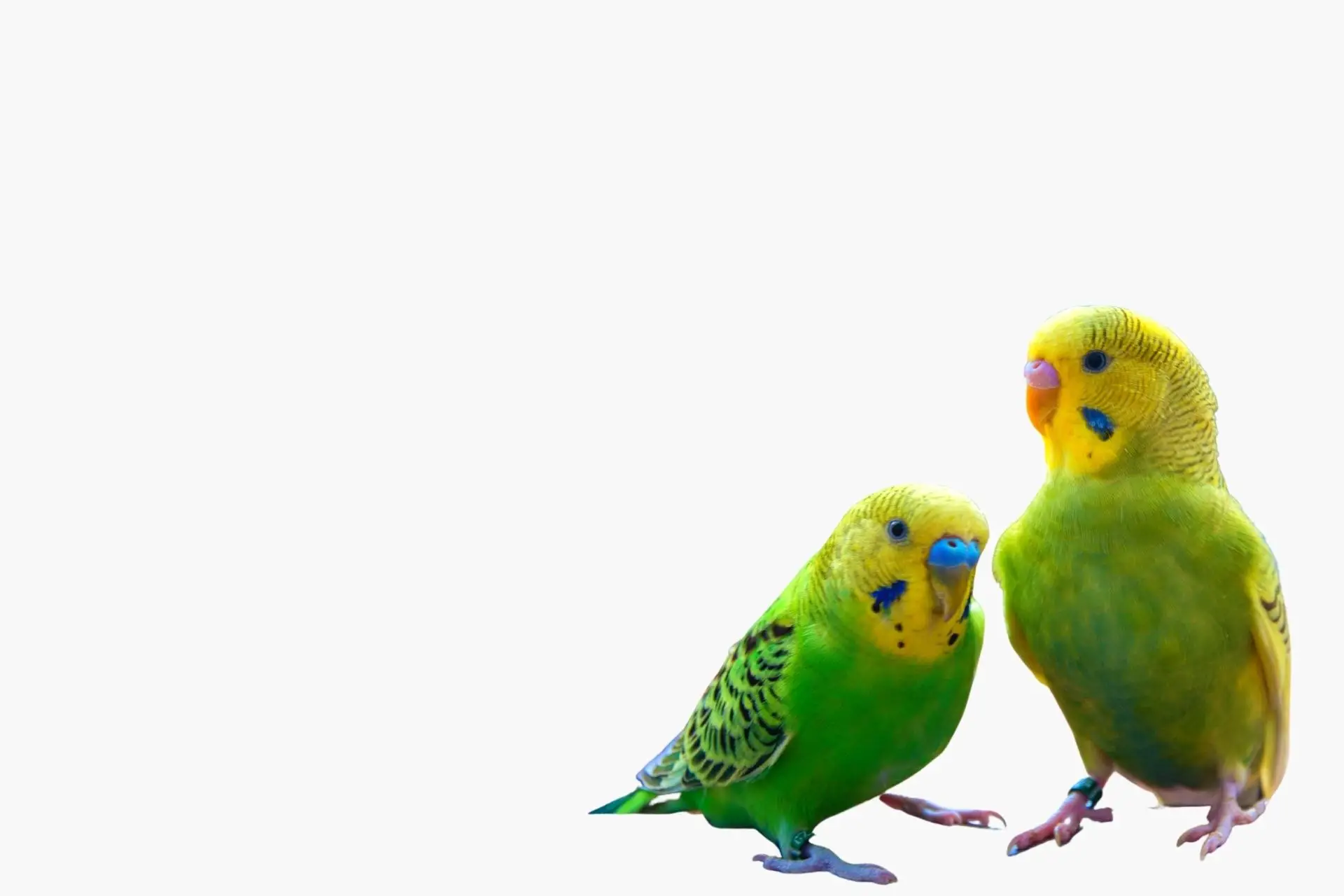
When parakeets are young, both the males and the females look almost exactly the same. As the become sexually mature, the skin around the nostrils (also called the cere) will begin to change color. Young parakeets have a flesh colored cere. Adult males have blue and adult female ceres will either stay fleshy pink or turn brown. Some female ceres will also wrinkle while the males cere is topically smooth.

Behavioral differenced between male and female parakeets

Male parakeets are said to be more talkative than females but tend to have less energy when they get older. Females are said to be less talkative but remain extremely playful and active their entire lives. Females definitely chew a lot more than males do. This may be because in the wild they are in charge of finding a good nesting hole (the lay eggs in natural tree cavities).  Once they find a good hole to nest in they usually chew the inside to make it more accommodating for them and their young.

Female parakeets can be a bit trickier to keep healthy because egg laying is stressful on their bodies. They can lay eggs even without mating but the eggs will not be fertile and will not hatch. Make sure that females get plenty of calcium in their diet. Especially if they are laying eggs.

If you are housing multiple birds together I recommend getting either all males or all females unless you want babies being born. If you want to mix boys and girls, make sure there are not more females then males. The women will fight over the men if the numbers aren’t even. Oddly enough, male parakeets don’t ever seem fight over women.

No Comments, add your own comment

Pet Parakeets and Children

The above photo was taken by Chris Saccheri

People often think of parakeets as good starter pets for children. They’re small, cute, colorful, and compared to other pets they don’t make too much noise. Keeping pets is fun and of course it’s always a great learning opportunity but before you go out and buy your kid a parakeet, there are a few things you should consider.

Parakeets are Breakable

A parakeet is a lot tougher than he looks but when you’re only 7 inches tall there is a limit to how much abuse you can take. Many small kids (especially 5 years old and under) like to grab animals, pet hard, and play rough. If this is the case with your child then a parakeet is not a good match. What was supposed to be a wonderful experience of owning a pet is likely to end in tears.

Parakeets Need Daily Care

Food and water needs to be added every day for your pet parakeet. Even a child with the best intentions can easily forget the routine. If you get a parakeet for your child, it’s your responsibility to check on the bird at least once a day to see that he’s been properly taken care of.

Parakeets Need Attention

When parakeets are housed alone (no cage mates) they need direct attention from people everyday in order to be mentally and emotionally happy. 1 to 4 hours of daily supervised play time out side the cage is ideal. If your child has a busy schedule with school, sports, and summer camps, you are the one that’s going to have to give your bird that attention. Are you up for it?

Parakeets Bite

Parakeets can get feisty if they have not been properly tamed, are frightened, feel mistreated, or simply don’t want to be played with at the moment. Parakeet bites don’t usually do any harm to adult fingers but little kid fingers can easily bleed. Can your kid handle the occasional bloody finger? It’s bound to happen at least once, even with the nicest of birds.

Parakeet Cages Need Cleaning

Birds don’t generally stink if you keep them clean but they can sure be messy. The papers in your parakeet cage should be changed every day and once a week a deep cleaning should be done of the entire cage. This is a great opportunity for a child to learn some responsibility but keep in mind that you’ll be doing a lot of the work too.

If you and your kid feel you can take on all the tasks of keeping a parakeet alive and healthy then I suggest you go for it! It will be a blast. I wish you luck. Remember, if you have any questions about pet parakeets, just visit us here at MyPetParakeet.com

No Comments, add your own comment

The above photo was taken by Ann Britton who submitted it as a user submitted photo to the ABC. It shows a flock of budgerigars at Boulia in far west Queensland (15 October 2009).

In order to keep your pet parakeet happy it’s important for you understand how these wonderful little birds live their lives in the wild. The more you can make your parakeet’s life resemble the life of his wild cousins, they happier he will be.

Wild parakeets are nomadic creatures (they live there lives flying from place to place) that live in huge flocks found in Australia’s arid outback. This is an environment that is extremely harsh to virtually all living things. In order to cope with the lack of food and water found in their desert home, parakeets have several incredible adaptations that set them apart from other parrots. They are small which helps them live on less food than larger parrots, they can breed all year round (instead of only during certain seasons like a macaw or conure) and they have a speacial gland that allows them to drink salty water without getting sick.  Parakeet bodies are so efficient at using water that if the temperature is cool, they can go up to 30 days without having to drink any water at all (please don’t try this with your pet parakeet).

Social life of a wild Parakeet

Wild Parakeets are never alone. They are extremely social animals that need a friend close by at all times in order to feel safe. On occasion you might see a single pair of parakeets but they usually fly in flocks if 5 or more. If conditions are good they will fly in groups of well over 1000.

Parakeet flocks take off early in the morning in search of grass seeds (their favorite food) and fresh water to drink. Within the flock they mimic each other’s sounds and actions as they go. This is how they are able to learn and teach each other new skills.

Unlike other birds, parakeets do not seem to have any sort of “pecking order” inside the flock. There are no leaders and no servants among parakeets. All are all treated equal within the group. They eat, they select mates, and they find nesting grounds all on a first come first serve basis. Small fights can break out when a bird’s personal space is invaded or when two birds are going for the same seeds at the same time but these fights are rare and the winner doesn’t seem to gain any sort of lasting authority among the flock.

Wild Parakeet Food

The diet of a wild parakeet consists of the seeds of over 20 plants which is an amazing variety for any wild animal. That’s more variety than most people typically get in their own diets. Most of the seeds come from grasses like Astrepla Lappacea.

Wild parakeets seem to be totally vegetarian. They have never been seen to eat insects or other animal foods. They are not picky eaters. They will eat the seeds from virtually any plant they find (as long as the seed is ripe).

Parakeet flocks will feed early in the morning, nap in a tree throughout the day when it’s hot, then go out in search of food again in the late afternoon as the temperature begins to cool once more.

Wild Parakeet Coloration

Pet parakeets can come in all shades of green, yellow, blue, and even white but wild parakeets are almost always green with yellow on the face, blue spots on the cheeks, and black stripes on the head and wings. The green coloration helps them blend in with the trees on which they live and the black stripes help them blend in with the rest of the flock to confuse predator birds that may be wanting to attack from above.

The amazing color variations found in the pet trade are the results of careful selective breeding over the past 150 years.

1 Comment, read and add comments